Manifestation and Mindset
How to Start a Manifestation Journal: Prompts, 369 Method, and Weekly Review
To start a manifestation journal, choose one goal you can describe clearly, write about why it matters, and end each entry with one action you can influence. Use ordinary prompts if you want flexibility; choose the 369 method only if brief repetition helps you stay focused. If you want a book beside you, first decide whether you need an open journal, a guided workbook, money-specific reflection, or a visual affirmation practice; the four options are compared below.

Key takeaways
- Make the practice small enough to repeat when life is full.
- Use reflection to clarify what you need, not to judge yourself.
- Pair affirmations and vision work with grounded action.
- Choose a book or journal that fits your current season.
Who this guide is for
This guide is for the woman who wants language for what she has been feeling, but does not want a lecture or a perfectly packaged routine. It is for the reader who may be carrying stress, ambition, faith, family expectations, work pressure, or a private desire for a softer season. When a search starts with manifestation journal prompts, it usually means the reader is ready for something practical enough to use today.
That may look like a ten-minute journal session before bed, a short coloring page after work, a boundary written in plain language, or one affirmation that is tied to an actual decision. The point is not to become a new person overnight. The point is to notice what is already asking for care and give it a little structure.
Set up your first manifestation journal entry
- Choose one area. Focus on one goal involving work, money, relationships, creativity, rest, confidence, or spiritual growth.
- Write the present truth. Record where you are now, including constraints you do not control.
- Name the desired direction. Use a sentence you can believe, such as “I am building a steadier creative practice.”
- Separate influence from uncertainty. List one choice you control and one outcome you cannot promise.
- Close with an action. Pick a step small enough to complete or schedule within twenty-four hours.
Date the entry so your weekly review has evidence to work with. You do not need a special notebook, perfect handwriting, or a claim that the desired result has already happened.
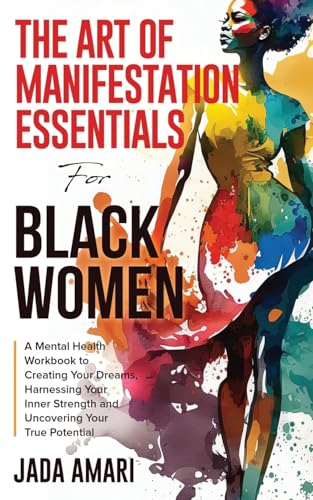
The Art of Manifestation Essentials for Black Women
This verified Jada Amari workbook is the structured choice when you want guided prompts instead of designing each entry yourself. Review the book details and available formats, or compare the workbook with the visual affirmation option.
View the paperback on AmazonWhat this practice is really about
You may arrive here wanting a simple way to turn an intention into a repeatable writing practice. The goal is not to add pressure. It is to use a prompt, review, or repetition method that helps you hear yourself clearly and make one grounded decision.
For Black women especially, self-care and manifestation content can become too polished and too generic. A better approach is practical: name what is draining you, name what you want to protect, and name one choice that can move your week in a better direction.
Common mistakes that make the work harder
The first mistake is turning reflection into another performance. If the page has to sound wise, polished, or perfectly spiritual, it stops being useful. Private writing can be plain. It can be messy. It can repeat itself. That honesty is often where the useful pattern shows up.
The second mistake is using inspiration as a substitute for support. A quote, affirmation, or coloring page can help you pause, but it should not become a way to ignore exhaustion, unfair treatment, financial pressure, loneliness, grief, or fear. A grounded practice makes room for beauty and truth at the same time.
The third mistake is choosing a routine that only works on your easiest day. Build a version that works when you are tired. One paragraph, one page, one prompt, or one quiet coloring session can still count.
Choose prompts or the 369 method
| Method | How to use it | Choose it when |
|---|---|---|
| One daily prompt | Answer one question and finish with one action | You want flexibility or need to explore what you actually want |
| 369 method | Write one grounded intention 3 times in the morning, 6 around midday, and 9 in the evening | Short repetition helps you remember a clear priority |
| Weekly review only | Record actions, obstacles, learning, and the next experiment once a week | Daily writing feels like pressure or does not fit your schedule |
The numbers are a writing structure, not proof that repetition controls events. If writing the same sentence eighteen times becomes mechanical or anxious, switch to one prompt and one action.
Prompts to use this week
- What am I tired of pretending does not affect me?
- Where do I need more support, not more self-discipline?
- What would I choose if I trusted my own pace?
- What belief about myself needs to be challenged with evidence?
- What small act of care would make the next twenty-four hours lighter?
- Which part of this intention is within my influence this week?
- What evidence would show meaningful progress without requiring perfection?
Run a weekly review that changes the next week
- Evidence: What did I actually do, schedule, ask for, decline, or learn?
- Movement: What became clearer or easier, even if the outcome is unfinished?
- Constraints: What barrier needs a new plan, more time, or outside support?
- Adjustment: Should I keep, narrow, pause, or replace this intention?
- Next action: What is the smallest useful step for the coming week?
How to use a workbook without rushing
Open to one page and treat it as a conversation, not a performance. If a prompt feels too big, answer it with three bullet points. If it feels too tender, write what you are ready to say today and return later.
The best workbook practice is not about finishing quickly. It is about building a record of what you are learning, what you are releasing, and what you are choosing next.
Start with the section that matches the question you came with. If you need a routine, repeat the same page or prompt for a week before adding something new. If you want more structure, compare the written workbook and affirmation coloring formats before choosing a book.
Choose an open journal or guided format
Choose by the kind of support you will actually use. A blank notebook is enough if you like creating your own prompts. If you want a Jada Amari format, use the decision below to match the book to your practice instead of treating every manifestation book as interchangeable.
| Your decision | Best-fit Jada Amari route | Why it fits |
|---|---|---|
| Build an ongoing journal-centered practice | The Powerful Law of Attraction for Black Women | A journal format for gratitude, self-trust, and grounded action |
| Follow structured prompts and exercises | The Art of Manifestation Essentials for Black Women | A guided workbook when a blank page feels too open-ended |
| Focus specifically on money habits and confidence | The Black Woman’s Guide to Money Magic and the Law of Attraction | A finance-specific workbook for reflection and practical systems |
| Start with a short visual affirmation practice | Positive Affirmation and Law of Attraction Coloring Book for Black Women | Color first, then add one sentence or one next action |
For a side-by-side look at available time, desired structure, current need, and gift fit, visit the Jada Amari manifestation book comparison.
- Manifestation for Black Women: A Grounded Guide to Vision, Action, and BeliefRelated guide
- 369 Manifestation Method for Beginners: A Grounded Journaling RoutineRelated guide
- Vision Board Journal Prompts for Black WomenRelated guide
- Browse Jada Amari booksBook catalog
- Read more Jada Amari guidesArticle hub
FAQ
How do I start with manifestation journal prompts?
Start with one short reflection prompt and one action you can take this week. Keep it small enough that you can repeat it.
How often should I journal or reflect?
Two or three short sessions per week is enough for many readers. Consistency matters more than filling many pages at once.
Is a workbook enough on its own?
A workbook can support reflection and consistency, but it is not a replacement for professional help when someone needs it.
Should I use an open journal, workbook, or affirmation coloring book?
Choose an open journal for an ongoing writing habit, a guided workbook for structured prompts, a money workbook for finance-specific reflection, or an affirmation coloring book for a shorter visual practice. The best choice is the one you can use consistently without turning reflection into pressure.