Spiritual Self-Care
Spirit Guides for Beginners: How to Reflect, Journal, and Listen Inward
If you are curious about spirit guides, start with reflection rather than certainty. This beginner practice helps you separate an impression, your interpretation, and the practical choice you make next.

Decide what “listen inward” means before you act
- A feeling tells you about your present emotional state, not what will happen next.
- A value names what matters to you, such as honesty, rest, safety, faith, or connection.
- A practical need points to support you can request or an action you can verify.
- A spiritual interpretation can be meaningful without being treated as proof or a command.
Who this guide is for
This guide is for a beginner who is curious about spirit-guide language and wants to explore it without surrendering her judgment. It is especially useful when an impression feels important but you are unsure whether it reflects intuition, emotion, hope, fear, or a need that has not yet been named.
The reader decision is simple: do you need to understand the impression more clearly, or do you already know the practical conversation, boundary, rest, or research step that comes next? Reflection is useful for the first situation. A small, verifiable action is usually more useful for the second.
A 20-minute inward-listening check
- Record the impression in plain language. Write what you thought, felt, dreamed, or noticed without adding a conclusion.
- Name the emotion. Try one or two words: hopeful, uneasy, relieved, curious, lonely, energized, or uncertain.
- Name the value underneath it. Ask what matters here—belonging, freedom, security, purpose, honesty, or something else.
- Name the practical need. This might be more information, rest, a direct conversation, a boundary, or support from someone qualified.
- Choose a reversible next step. Journal again, ask a question, check a fact, or wait before making a high-stakes decision.
Example: “I keep thinking about changing jobs” is the observation. “I feel boxed in” is the emotion. “Growth and respect matter to me” names the values. “I need clearer information about my options” identifies the need. Updating one resume section or researching one role is a grounded next step; resigning because the thought felt like a sign is not.
Choose open reflection or guided structure
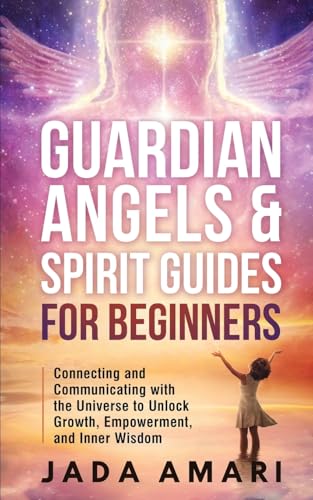
Use the free check above if you mainly need to sort a feeling, value, and next step. Consider Jada Amari’s Guardian Angels & Spirit Guides for Beginners if you want a guided book to return to over time. The verified Jada catalog lists paperback and ebook formats; Amazon availability can change.
See the paperback on AmazonSee the ebook on AmazonWhat this practice is really about
You may be looking for language for something you have already been carrying. The goal is not to force an answer or treat every coincidence as instruction. The goal is to distinguish an inner response from an external fact, then make a choice that still respects evidence, consent, safety, and your values.
For Black women especially, self-care and manifestation content can become too polished and too generic. A better approach is practical: name what is draining you, name what you want to protect, and name one choice that can move your week in a better direction.
Common mistakes that make the work harder
The first mistake is turning reflection into another performance. If the page has to sound wise, polished, or perfectly spiritual, it stops being useful. Private writing can be plain. It can be messy. It can repeat itself. That honesty is often where the useful pattern shows up.
The second mistake is using inspiration as a substitute for support. A quote, affirmation, or coloring page can help you pause, but it should not become a way to ignore exhaustion, unfair treatment, financial pressure, loneliness, grief, or fear. A grounded practice makes room for beauty and truth at the same time.
The third mistake is choosing a routine that only works on your easiest day. Build a version that works when you are tired. One paragraph, one page, one prompt, or one quiet coloring session can still count.
Which lens should you use?
| If you notice | Ask | Grounded response |
|---|---|---|
| A strong feeling | What emotion is present, and what may have triggered it? | Pause, write, rest, or talk with someone trustworthy. |
| A repeated thought | Does it point to a value, fear, unfinished task, or unmet need? | Check the facts and take one reversible step. |
| A sign or coincidence | What meaning am I giving it, and what other explanations fit? | Hold the meaning lightly; do not treat it as proof. |
| A high-stakes urge | What information or qualified help is missing? | Delay action until you can verify the important details. |
Prompts to use this week
- What did I actually notice before I interpreted it?
- Which feeling is strongest, and what may have contributed to it?
- What value or need does this impression bring into focus?
- Which parts can I verify, and which remain personal interpretation?
- What reversible step would respect both the meaning I feel and the facts I know?
- What would make me pause and seek informed support?
How to use a workbook without rushing
Open to one page and treat it as a conversation, not a performance. If a prompt feels too big, answer it with three bullet points. If it feels too tender, write what you are ready to say today and return later.
The best workbook practice is not about finishing quickly. It is about building a record of what you are learning, what you are releasing, and what you are choosing next.
Use a blank notebook if you want room to question and reinterpret what you notice. Use guided prompts if you want a repeatable routine. In either format, revisit earlier entries before making a major decision so one moment does not carry more weight than it should.
Choosing the right next step
Your clearest decision is about the support you need, not proving a belief. Continue with the free check if one impression needs sorting. Choose guided prompts if a repeatable structure would help you reflect across several weeks. Seek qualified help when the decision involves health, safety, money, law, work, or another person’s wellbeing.
For more ways to compare reflective resources, visit the spiritual growth books hub. For the exact guided option featured here, review Guardian Angels & Spirit Guides for Beginners.
- Spiritual Self-Care for Black Women: Rituals, Reflection, and Personal GrowthRelated guide
- Guardian Angels and Spirit Guides: A Beginner-Friendly Journaling PracticeRelated guide
- Spiritual Journaling Prompts for BeginnersRelated guide
- Browse Jada Amari booksBook catalog
- Read more Jada Amari guidesArticle hub
FAQ
How do I start with spirit guides for beginners?
Record the impression in plain language, name the feeling, value, and practical need it brings up, then choose one reversible action.
How often should I journal or reflect?
Two or three short sessions per week is enough for many readers. Consistency matters more than filling many pages at once.
Is a workbook enough on its own?
A workbook can support reflection and consistency, but it is not a replacement for professional help when someone needs it.